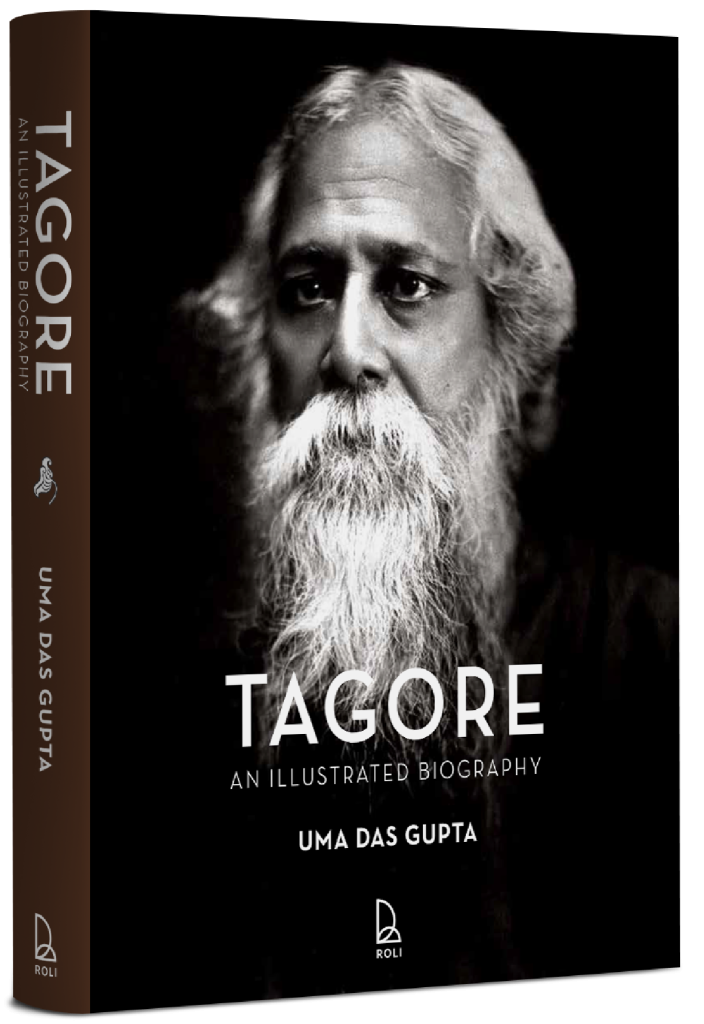
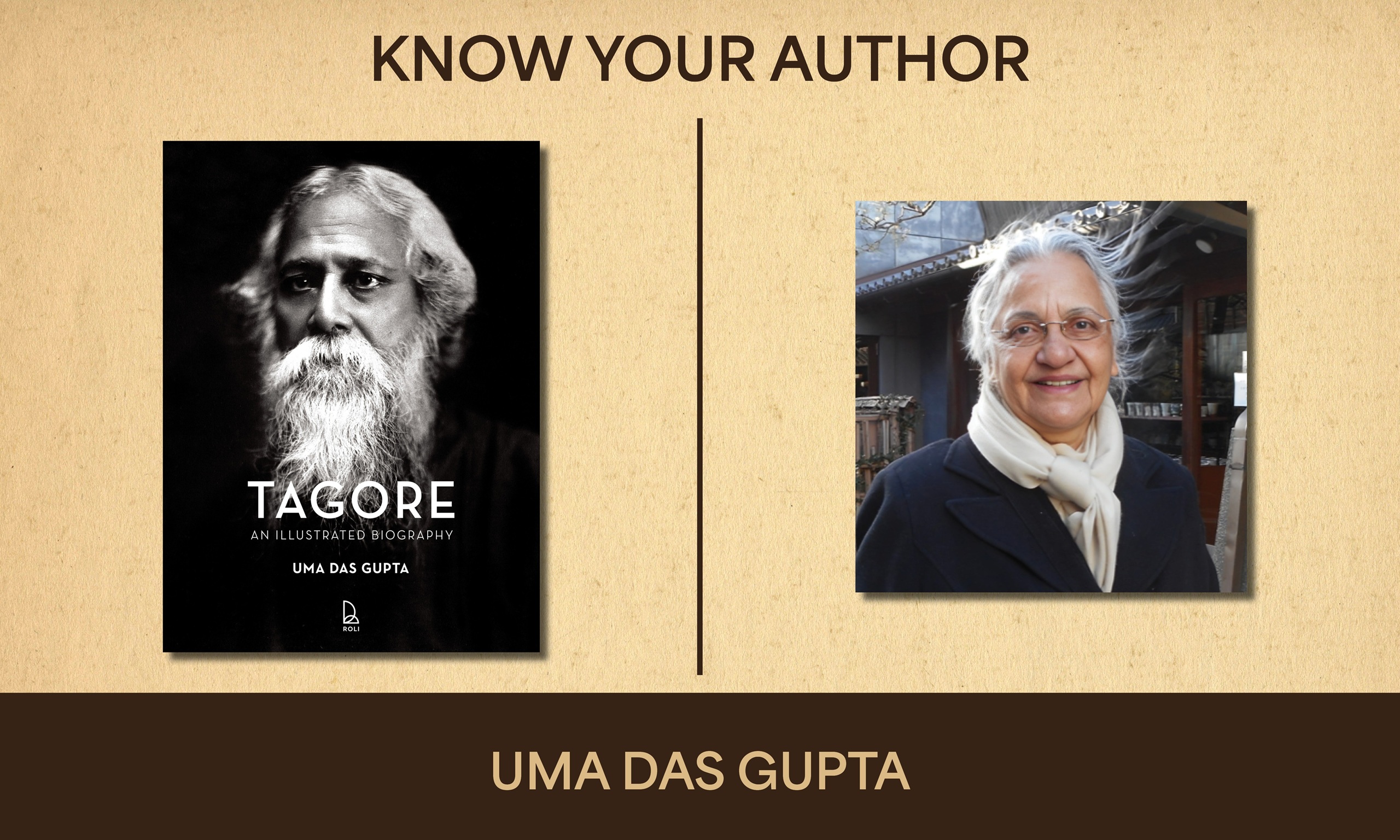
In Tagore: An Illustrated Biography, renowned Tagore scholar Uma Das Gupta follows the Nobel Laureate’s remarkable life through rare photographs, artworks, letters and archival material, bringing to life the family, places and encounters that shaped Tagore and the world he continues to inspire. Here is a candid interview we conducted with her.
1. Rabindranath Tagore wore so many hats: poet, novelist, composer, teacher and artist. Which side of him do you think is most often overlooked?
This very question has for example overlooked one of the hats, for Rabindranath Tagore was also an educator. He founded a school for an alternative education at the turn of the 20th century and an international university named Visva-Bharati (World Learning) both at Santiniketan in rural Bengal.
2. Tagore travelled widely and engaged with thinkers from around the world. Which one encounter or friendship do you find particularly fascinating?
I found his visit to China in 1924 remarkable and his friendship with the Chinese painter Ju Peon moving. Ju Peon was one of the pioneers of modern Chinese art.
3. Tagore created an extraordinary body of work across so many forms. Is there a lesser-known poem, song or piece of writing by him that you wish more people would discover?
This is a difficult question because the canvas one is referring to is vast as is the readership. One can have a conversation over a so-called lesser known poem but that is all.
4. If you could have dinner with one historical figure from your book apart from Tagore, who would it be?
Jawaharlal Nehru, who often visited Santiniketan as a young nationalist leader. I would have liked to hear from Nehru what attracted him to Tagore, though Tagore had left the Nationalist Movement in protest in 1905.
5. What is something about Tagore that you think would surprise readers who know him only through his most famous works?
That even with being foremost a poet and litterateur Tagore gave his life to an alternative education to bring the city and village close such as his work of rural reconstruction in the villages.
6. What do you hope readers will take away from Tagore: An Illustrated Biography?
I hope that this book helps readers understand that Rabindranath Tagore was not only a world poet but a man of indefatigable action.
Tagore: An Illustrated History