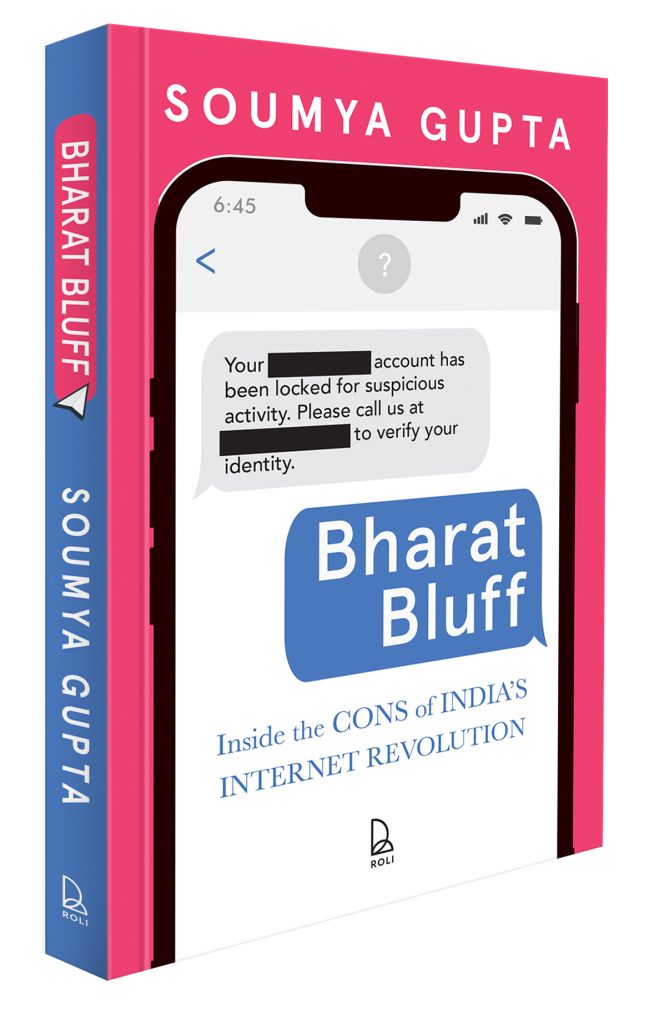
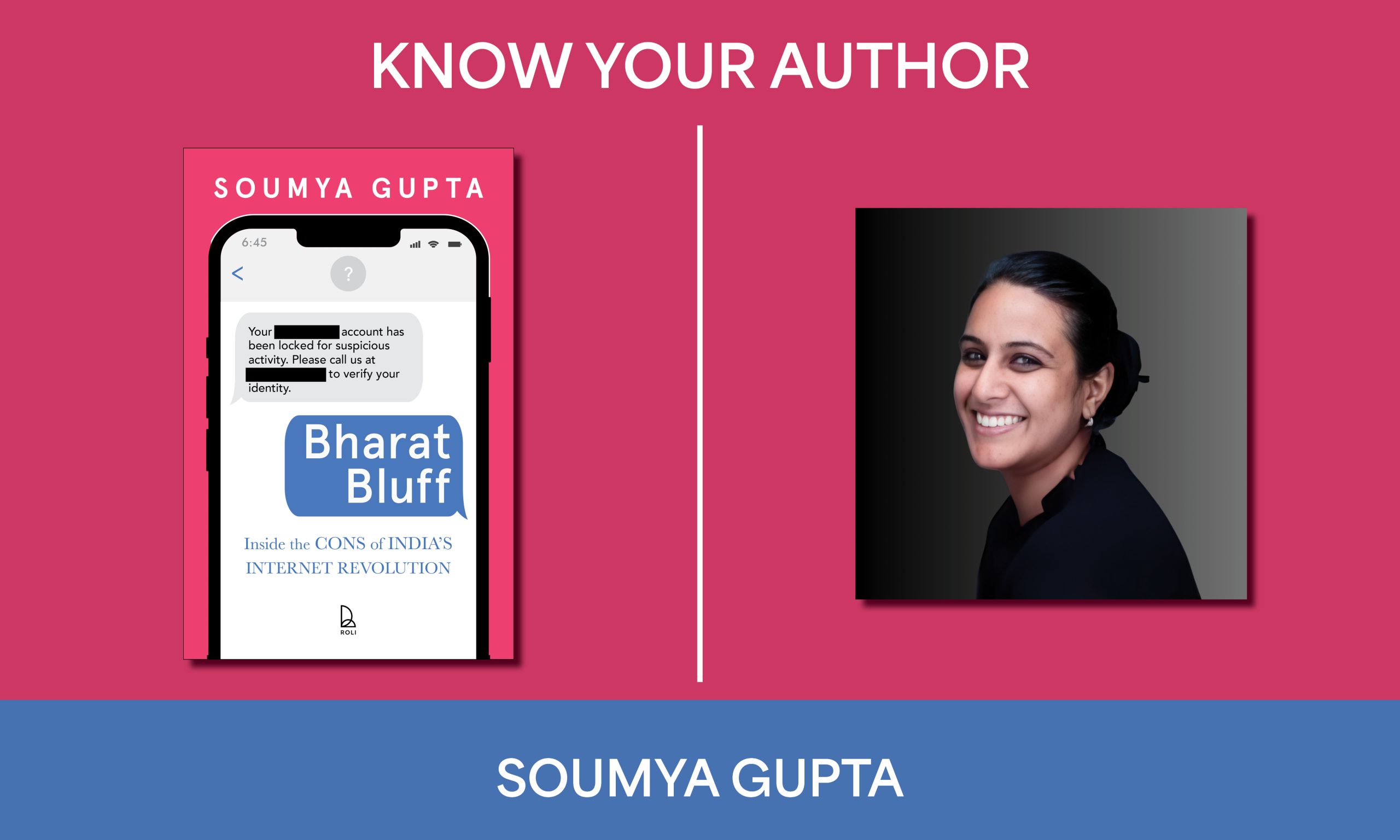
In Bharat Bluff: Inside the Cons of India’s Internet Revolution, finance and technology journalist Soumya Gupta connects the individual human stories at the heart of digital scam headlines to systemic gaps in oversight and governance. The book exposes how aspiration, technology, and weak safeguards can collide with devastating effect. It also dwells on what exactly is turning India’s internet revolution into the spring well of online fraud and what, if anything, we can do about it. Here is a candid interview we conducted with her.
1. What first pulled you into this world of online scams? Was there a particular story that stuck with you?
Since the pandemic years, it has become impossible to ignore the near-daily headlines of scams hitting nearly everyone across India. I used to think this was a problem that affected the elderly, or those who are new to technology. A few incidents made me realize I was wrong. A prominent journalist wrote about how she was fooled into a false job by an elaborate scam whose perpetrators she still hasn’t discovered. The infamous case of Sanchayita Ruth Lenin, a bright woman from a seemingly disadvantaged background, began to play out on my Instagram feed. And I started to see the government, Big Tech companies, and banks begin to warn people about ‘digital arrests’, an idea so preposterous, I did not think anyone could fall for it, let alone rich, educated professionals and business owners. Finally, I lost some money to a scam myself. And the experience left me so stunned, I realized that no one is safe from scams. We are all vulnerable.
There is a lot of excellent reporting on the common kinds of scams hitting people across India. Some formats, such as digital arrests, have become legend. There are also excellent reports and books on how these scam networks function. But I could not find enough analysis for the layperson on how this so-called ‘Scam Economy’ is structured. All scammers tap into our vulnerabilities, but is there a way to classify them so we can better understand the nature of this beast? That got me thinking about the basic motivations behind the innumerable stories of scams we see reported daily and the cases I interviewed for this book as well. What emerged was a pattern – most scams tap into our fear of loss or authority, such as digital arrests. Others promise us riches quickly and tap into our greed. And finally, I realized, as people shape their online personas and beliefs, that we were also exposed to scammers who studied our online lives and tapped into our beliefs and ideologies. This last bit was the most interesting form of scams to study, because it is newer and shaped by our rapidly evolving social media lives. I think it will keep mutating and will be studied closely in the coming years.
3. You describe online fraud as a ‘way of life’ in India today. Was that a difficult idea to sit with while writing? Is India uniquely vulnerable to this ‘scam economy,’ or is this a global pattern playing out differently here?
It is certainly a very scary and sobering idea, but I think we can see it in our daily lives as well. Compared to the pre-pandemic years, it is harder now to trust strangers. We are not shocked when someone is duped of their money while transacting online, or making an investment. We are drowning in OTPs and codes to verify things. We keep a check on older members of the family, ensuring they are safe online. It isn’t just an Indian thing. There was a recent masala Hollywood film starring Jason Statham who takes on a gang that defrauds elderly people online! Everyone can see that our online lives are leaving us vulnerable. What makes India so vulnerable is that we are an extremely large population with a growing income, where a large chunk of people is getting used to being online for the first time (relative to the rest of the world). Our institutional checks are also not as strong as say, in Europe. This all translates into a thriving ‘scam economy’.
I think talking to victims of scams, and to people who deal with that ecosystem regularly, was what really helped me understand what we are up against. There are two questions that stayed with me as I researched this book: Why are we always getting scammed even after so much news and social media content is out there to warn us against these? Second, who is on the other end and why are they involved in scamming people? What does that tell us about the state of our economy and society that an ‘IT job’ involving scamming people is attracting hundreds of thousands of workers, including people who go abroad? Searching for the answers to these questions helped me realize that we are up against a larger social problem.
Yes, I think we underestimate how vulnerable we are. We are yet to draw a line between our online lives, our personal data floating about the Internet, our beliefs and feelings we post willingly in public, and the nature of being human that will always leave us with some vulnerabilities. Being good with online transactions, or well versed with new tech, or highly educated, is not a good enough shield from being scammed. All it takes is one person to figure out what makes us tick.
5. How do you balance telling these stories honestly without making readers feel overwhelmed or paranoid?
I think investigating the ‘why’ behind scams in India helps make it, paradoxically, less scary. It is scary to deal with something that we don’t understand. But when we know how and why this scam economy operates, we can begin to think about individual, and community ways to fight back and protect ourselves. I hope that as readers go through this book, they’ll find themselves equipped with stories of resistance and the hope that this is not an insurmountable reality.
This is where stories of fighting back and resisting are so important. Conversations with people like Babu Lal, who is fighting loan apps, or with Rajneil, who is helping senior citizens arm themselves, or with Akanksha Ahluwalia at DEF showed me that we can fight back. Journalists who painstakingly put these stories together serve to educate us on how to protect ourselves – such as in my conversation with Ayush. Also, special mention to YouTubers who bust online scammers full time. A great creator whose takedown videos I loved watching while researching this book is Scammer Payback, aka Pierogi, who enjoys frightening scam call centres by hacking into their systems and intimating the local police. He’s done several in India.
6. The book makes it clear how much of our data is just out there. Do you think people really grasp that yet?
I think people are starting to understand it. As they see more news of data breaches, or start getting spam calls with a lot of personal data, people are starting to see how easy it is to be targeted. I imagine that the passing of the Data Protection laws has also led to some more awareness. But us ordinary Indians, trying to go about their daily life and add some convenience online, may not fully grasp how much of our personal data lies exposed. It is poorly understood elsewhere too, except maybe in some mature countries with strict data protection laws. Data privacy and its importance is too abstract to grasp, and its impact on our lives is felt only when something goes wrong. Besides, the convenience of our online lives isn’t possible without giving away at least some of our personal data.
7. After everything you’ve seen and written, what’s one habit you think everyone should change immediately?
I think we need to stop trusting everything we see or read online, or getting persuaded to do something under the pressure of ‘too little time’. You may not be able to change how your data is handled or who is targeting you, but when the time comes and a scammer tries to target you, your biggest friend is time and a friend. Show that scary text or that tempting scheme to a trusted friend.
8. Has writing this book made you personally more cautious online, or just more aware?
I am definitely more aware than before. I think all of us are more cautious than we ever were; scams are part of regular conversation now. We all know someone (who may know someone) who may have been scammed. Does this mean we are now safer? I am not sure.
9. While reporting, did you notice a common emotional pattern in how people respond when they realize they’ve been scammed?
Yes! Usually, people seemed to go through a complex mix of familiar emotions – anger and denial at first, then embarrassment and shame, also remorse at the loss of money, perhaps reputation as well. I identified with it – I felt a similar mix when we lost money to scammers too. I found the people who fought back to be particularly inspiring, such as Rheea who filed an FIR, set the story straight, and was unbothered by the backlash she received online.
10. If readers take away just one shift in how they think or behave online after reading Bharat Bluff, what would you want it to be?
Beware, but don’t be afraid. The internet is a wonderful place, but it can hurt you. My biggest takeaway for myself, too, is that don’t try to protect yourself from scams nonstop, or you risk getting paranoid. Also, it will likely be ineffective. But if you deal with someone online who is using time and pressure to scare you, tempt you, or appeal to your deepest beliefs, just take a moment, breathe, and disconnect. Go talk to someone in the real world about it.
Bharat Bluff