
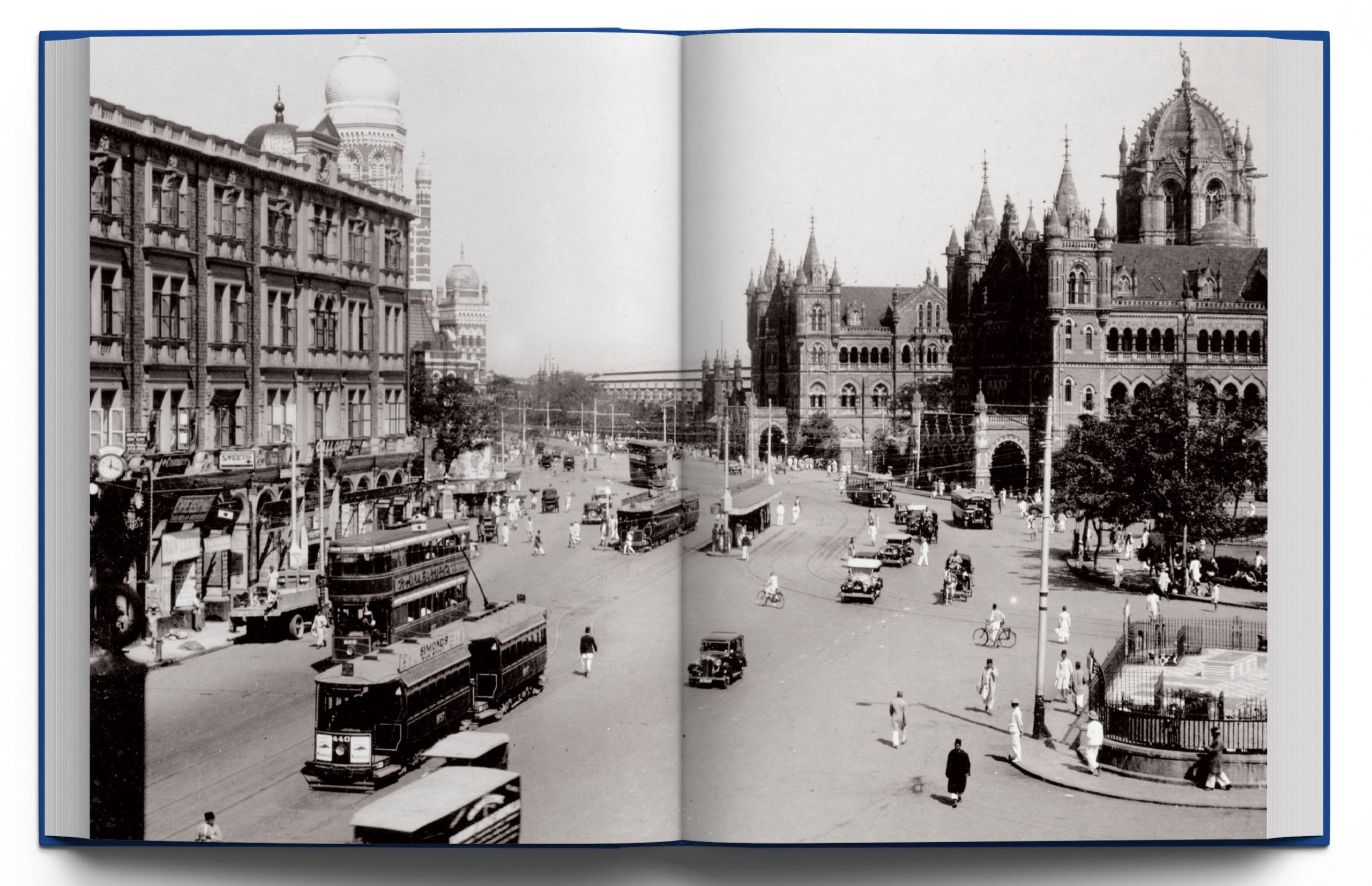
Step into the fascinating past of Bombay through this excerpt from Jehangir Sorabjee’s richly illustrated history of the city. Discover the people, places and stories that have shaped the city across centuries.
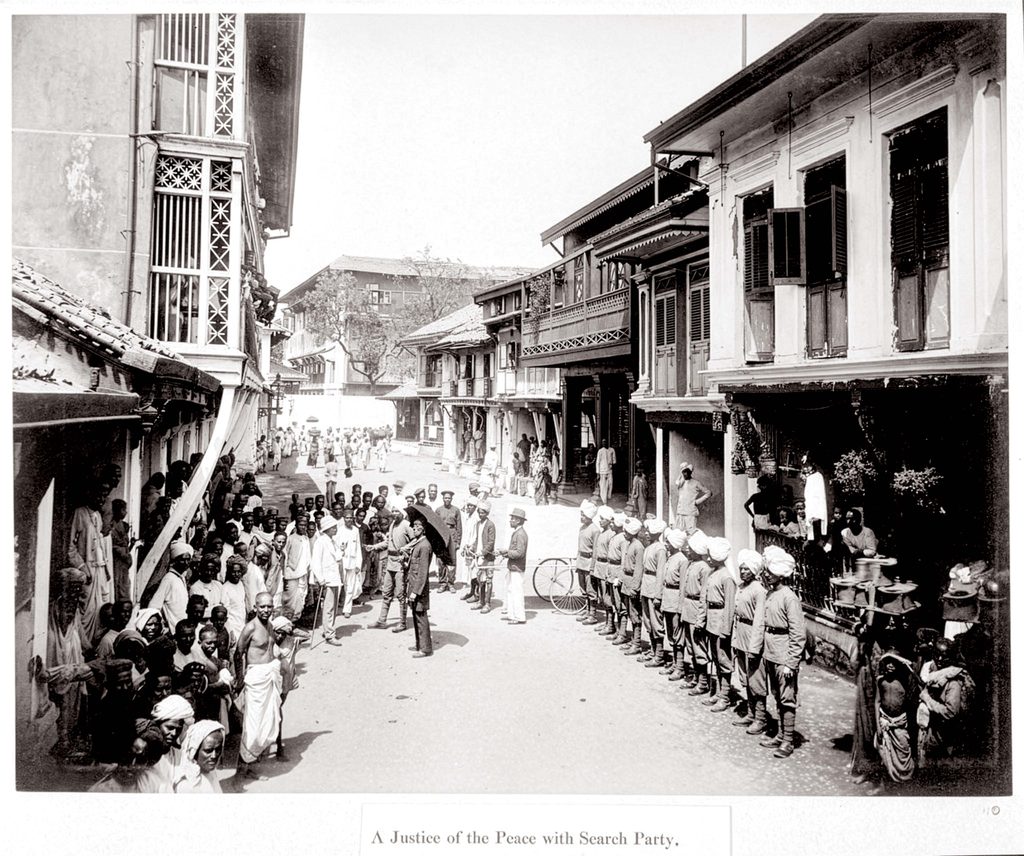
A justice of the peace with a military escort on a plague victim search, 1896–97.
By the 1890s Bombay was prosperous again. It had recovered from the disasters of the share crashes and bank failures of the 1860s. There were close to a 100 mills running and the docks had expanded and were thriving following the opening of the Suez Canal. There was even talk that the capital of India might be shifted from Calcutta to Bombay, a far cry from the situation in 1788, when Bombay was debt-ridden and Cornwallis the governor-general questioned its worth as a factory, ‘to load one ship in the year and collect a very small revenue’.
The prosperity was disrupted with a hammer blow in 1896 when bubonic plague struck and everything collapsed. The bubonic plague had been raging in Hong Kong and Canton for some time and there was anxiety that it might soon reach Bombay.
Dr Accacio Viegas was the first to identify a case in a chawl in the Mandvi district in September 1896, but this was underplayed by the authorities who wanted to avoid panic or any sort of embargo on the port admitting only to a few cases of ‘bubonic fever of a mild type’. Rats were found dying in large numbers and fleeing the areas of Mandvi, Chakla and the warehouses near the docks. By March 1897, large numbers of the citizenry were plague affected and were dying of both bubonic and pneumonic forms of the disease. Cats and pigeons were also affected by the plague and found dead or dying along with numerous human bodies which lay on the streets having perished shortly after being infected.
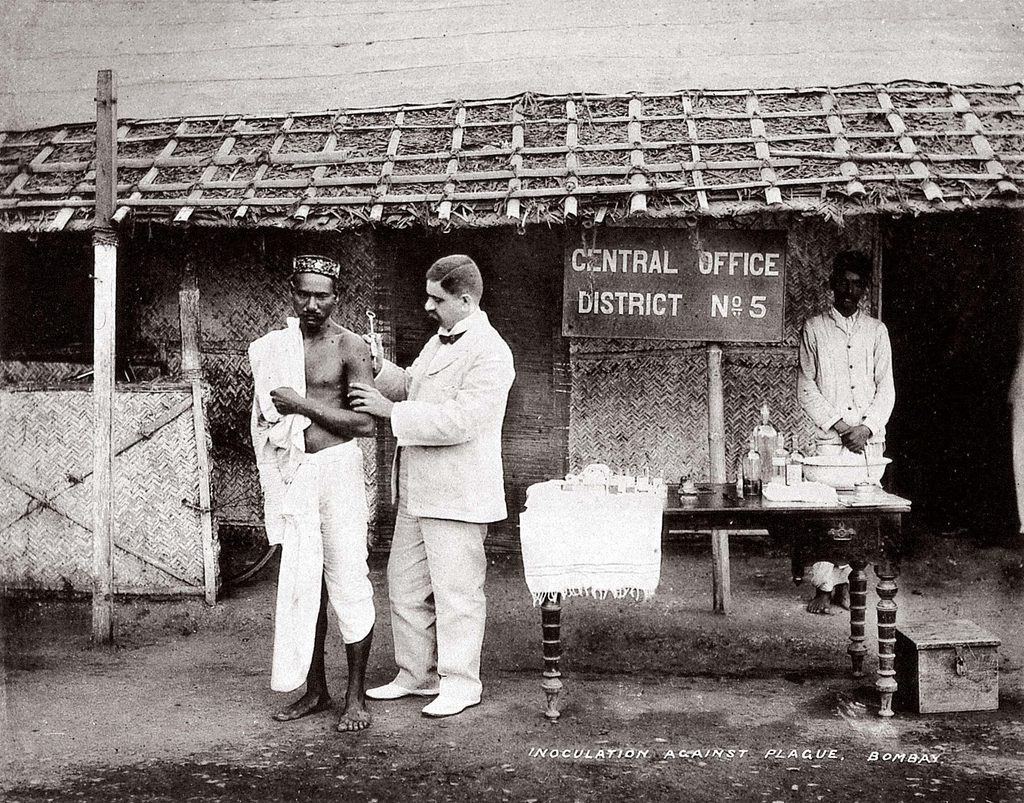
A doctor injects a patient as part of the plague inoculation campaign.
Panic set in the native areas which were then occupied by large numbers of migrant millhands, and labourers and huge numbers fled the city by any means. The government set up a committee to deal with this, headed by Brigadier General William Forbes Gatacre, and used heavy-handed measures based on theories of ‘sanitary methods’ to control the outbreak.
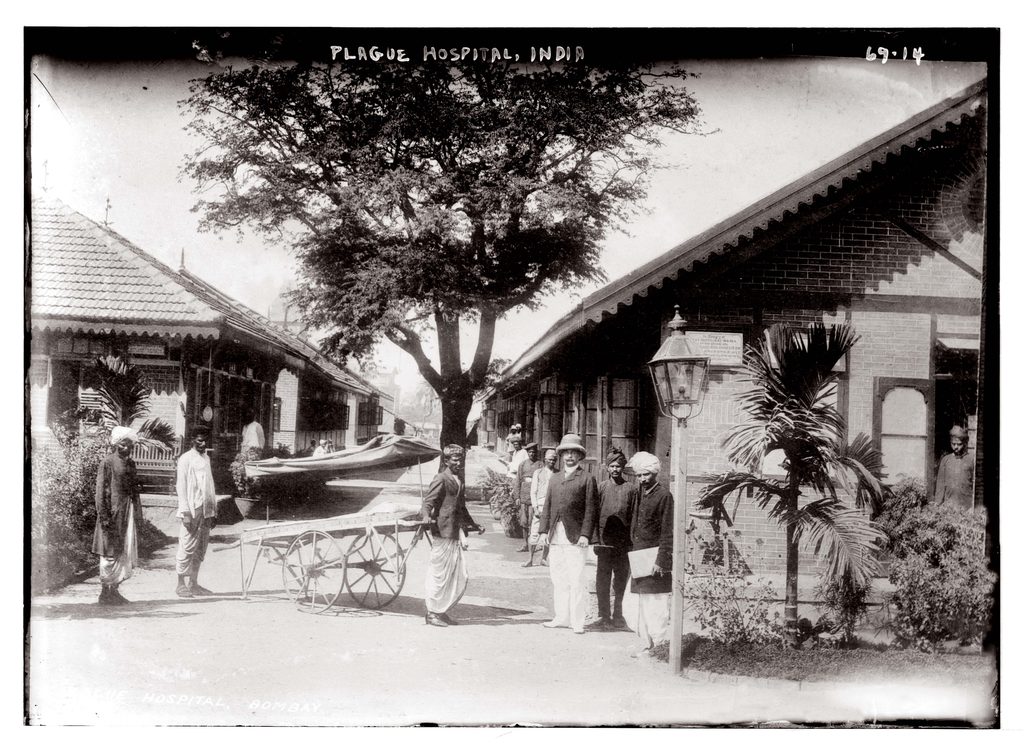
The plague hospital in Bombay, with stretcher carriers and staff, standing outside on duty.
Forced inspection of homes took place under an armed escort and patients with plague were forcibly removed to hospitals and contacts were quarantined in far-flung locations. Articles and possessions deemed to be infected were confiscated and burnt, earthen flooring was dug up and limewash was applied as a disinfectant on the inside and the outside of houses. Sewers were pumped full of millions of gallons of carbolic acid and salt water. The roofs of houses were opened up to allow ventilation.
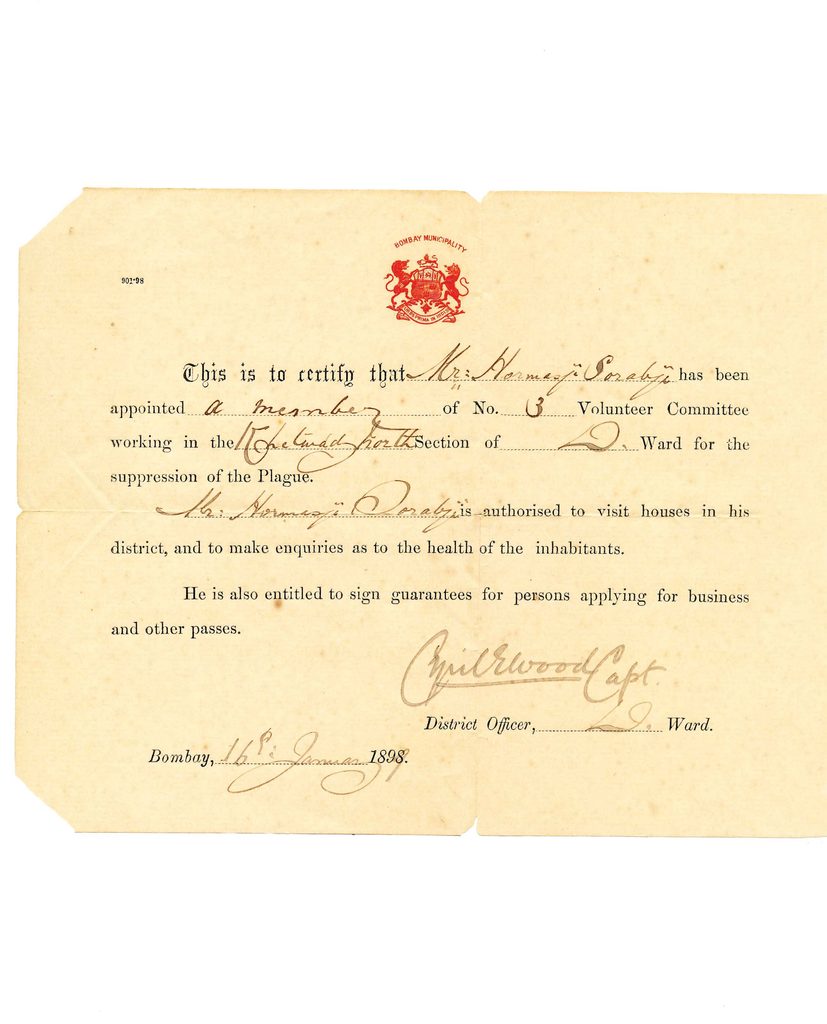
A plague order certificate-cumtestimonial issued to Hormasji Sorabji, 1898.
Large letters ‘UHH’ – which meant ‘unfit for human habitation’ – were painted onto many homes, and large sinister-looking black circled crosses indicated plague deaths had occurred in those marked houses. Corpses were compulsorily sprayed with carbolic acid and their clothes incinerated. Interestingly, hospitals were set up by local communities for their people to respect the caste segregations and dietary restrictions that were not respected by government authorities in their general hospitals causing additional offence to these distressed patients. In laboratories, plague bacteria intended for vaccine manufacture were grown specifically in goat’s broth in order to not offend communities who might find the use of beef or porcine broth unacceptable.
All this led to tremendous fear and resentment among the local population and a panic-driven exodus from the city of hundreds of thousands in special trains which ran especially for the fleeing populace. This, in time, led to the shuttering of many mills and establishments as there were no workers available. Hostility against the invasive measures undertaken was immense and riots ensued culminating with the assassination of the ICS officer in charge of plague control, Walter Rand, in Poona in 1897. Hospitals were stoned and some stormed in an attempt to retrieve patients forcibly quarantined there. Locals feared that many patients were being taken to various plague hospitals for experimental treatments as very few returned home alive. The local population only wanted to be treated at home by their local hakims and vaids.
