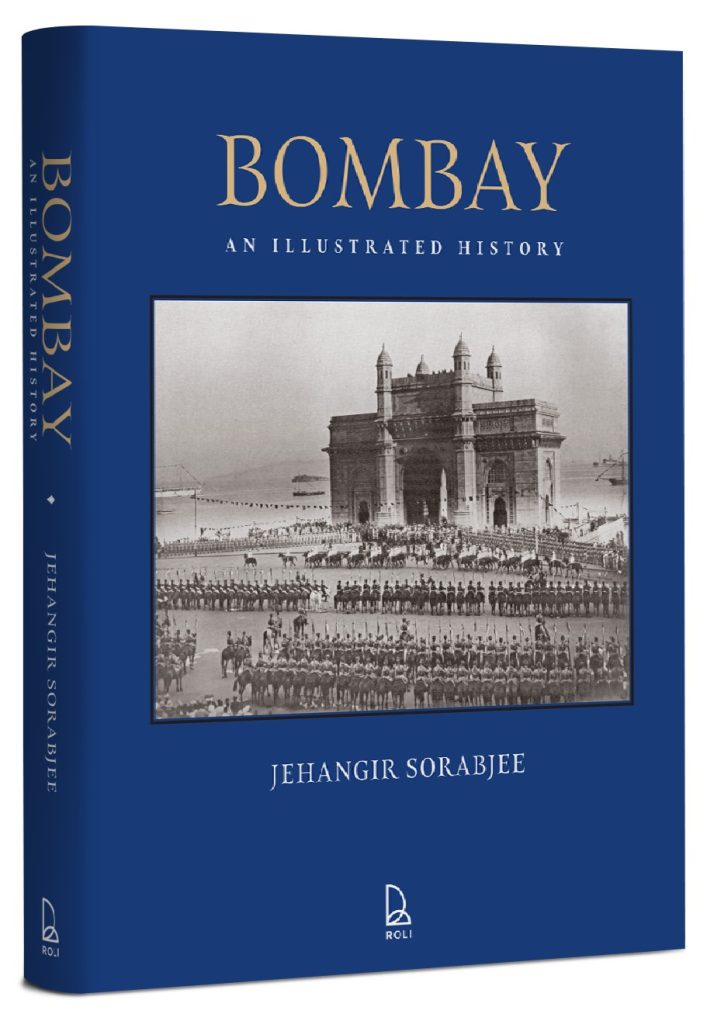
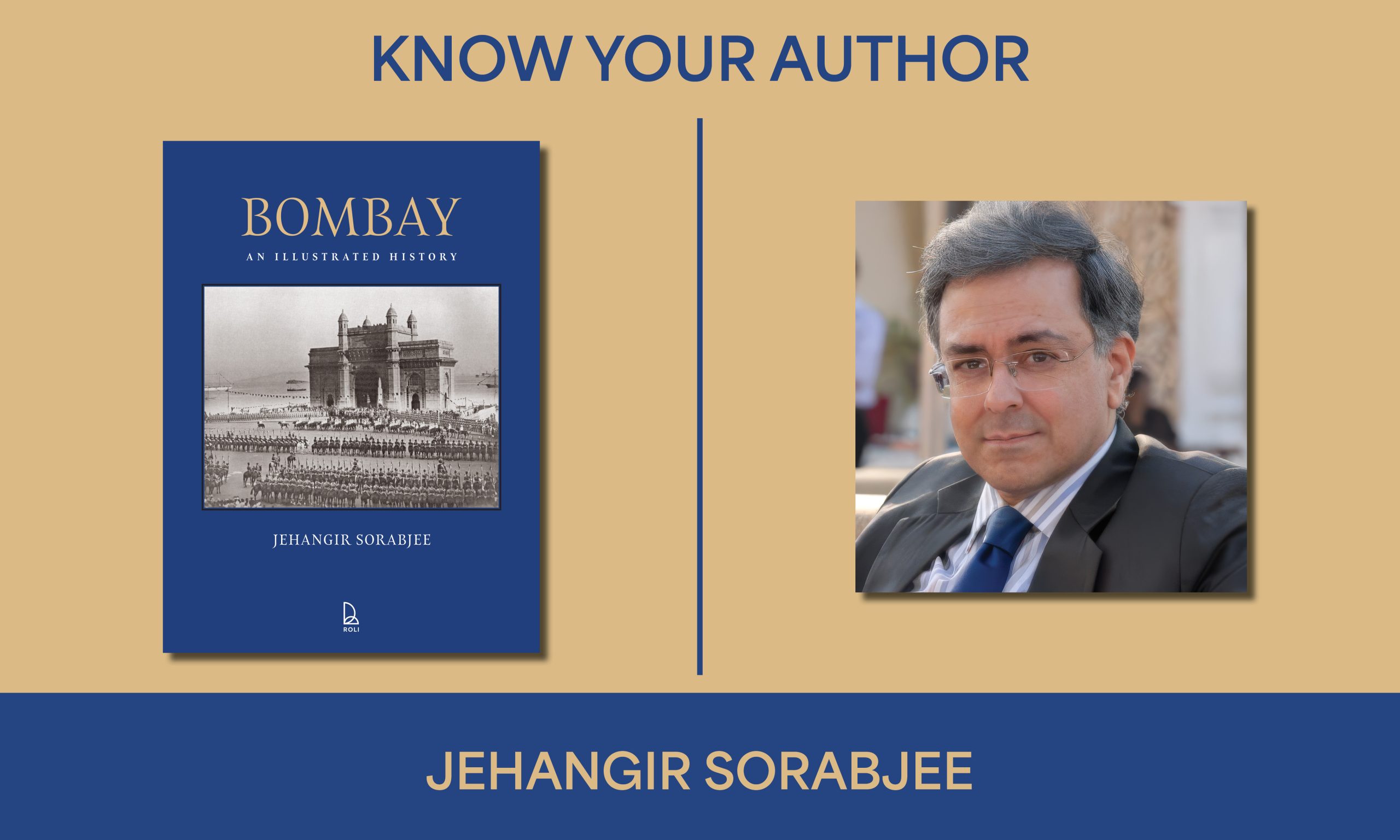
In Bombay: An Illustrated History, acclaimed photographer and writer Jehangir Sorabjee traces Bombay’s extraordinary journey through the people, places and events that made the city what it is today. Drawing on a remarkable collection of aerial photographs, lithographs, archival portraits and maps, he reveals a city forever in the making. Here is a candid interview we conducted with him.
1. Old photographs often capture aspects that history books overlook. Was there a particular photograph or illustration that stayed with you during your research?
Yes, there is a photograph from the 1870’s taken from Malabar Hill showing Chowpatty and Babulnath – all of which were just dense coconut groves with a few houses, a completely rural scene. All the built area was only seen in the Fort.
2. Did you discover any surprising or little-known stories about Bombay while researching the book?
There were many events connected with the growth of the city which all helped to make sense of the ethnic clustering in Mumbai. For example, the fact that the only Chinese temple is located in Dockyard Road was because large groups of Chinese coolies were brought to work at the docks and trained in a marine institute located there.
3. If you could travel back in time to any period in Bombay’s history, which would you choose and why? On a similar tangent, what is your favourite part of the city today?
Probably the 1930s and 1940s when most of the cities boundaries had been well defined. Populations then were stable and there was very little or no traffic. It was a city of houses and not tall apartment buildings. The air was good and the climate much milder.
My favourite part of the city today would be Byculla and Mazagon because of the juxtaposition of diverse ethnic communities and so many unknown heritage structures in that area.
4. What is one thing about the city of dreams that even people who have lived there all their lives might not know?
That the entire island of Bombay was once owned by a single Portuguese physician – Garcia D’Orta, and that until recently hundreds of acres of land consisting entire villages were privately owned by various families and their descendants.
5. When did you know you wanted to be a photographer? Which is your favourite camera?
I started using budget cameras in school days and would wait anxiously for the prints to come back from the laboratory. I did a lot of darkroom work in my college days and always had a camera with me. My favourite camera was my old film Nikon F3 but now I use various digital cameras.
6. Which is your favourite photograph from this book?
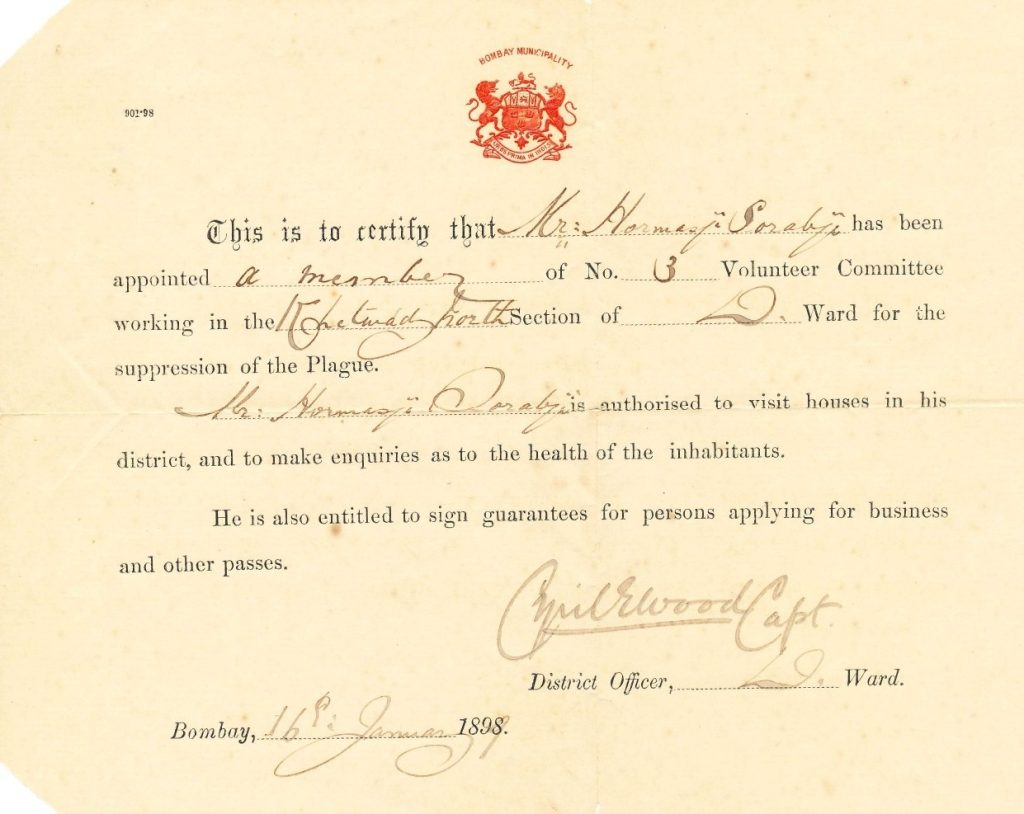
The photograph of the certificate given to my great-grandfather Hormusji Sorabji for his work during the plague epidemic in Bombay (see below). He was born in the city in 1854 when the fort was still standing and it makes me feel that our family have always served the city and are some of the original Bombaywallahs.
7. Who are your favourite writers and photographers?
I think Vikram Seth is in a class of his own. I really love the earlier William Dalrymple books but can’t get through his later ones easily. I enjoyed Aravind Adiga’s Last Man in Tower very much as also many of Rohinton Mistry’s books. Most of my reading is however non-fiction. In terms of photographers, Henri Cartier-Bresson, Steve McCurry, Raghubir Singh and Raghu Rai are all iconic. Yash Sheth from Bombay is one of the most exciting young talents I have come across recently.
8. What do you hope readers will take away from Bombay: An Illustrated History?
A greater understanding of the city and a growing love for its heritage and history.
Bombay: An Illustrated History